How Directional Drilling Works in Tampa Bay Ground
The covered-karst deck
The bay area's stratigraphy reads simply — sand, then clay, then limestone — and behaves anything but. The surface sands drill like a gift. The clay beneath is the region's quiet hero, confining water and bridging the limestone's dissolved voids. The limestone itself is karst: cavities, channels, and the occasional column of raveled ground working its way surface-ward, which is why this metro leads the country's sinkhole statistics. For drilling, the practical translation is fluid vigilance — full-time returns watching, staged lost-circulation response, conservative pressures — and respect for the fact that the deck's thickness changes without asking permission.
North matters: the clay thins toward Pasco and Hernando, which is exactly why the metro's sinkhole reputation concentrates there. Bores up the Suncoast arc carry the strongest karst posture in the portfolio.
Water on three sides and underneath
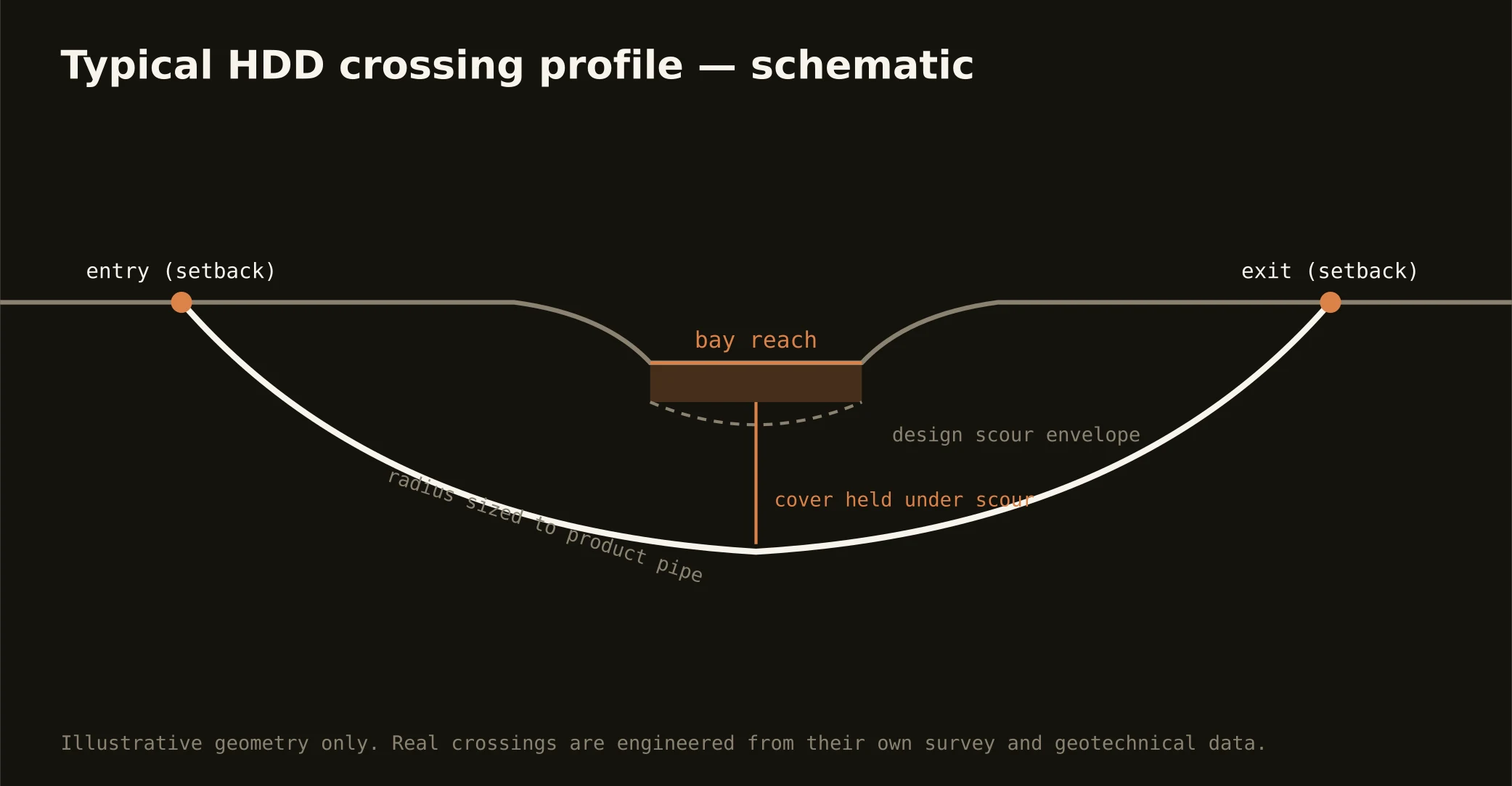
Between the bay, the bayous, the Gulf strip, and a water table snug under the sands, bay-area drilling is wet work by default: pits pump, product ballasts, and coastal materials get the salt conversation. The region also takes its water bodies seriously in the regulatory sense — decades of estuary restoration mean crossings of anything tidal carry environmental review and shoreline rules alongside the ordinary owners. The bore plans that thrive here treat that stack as the schedule's spine.
The sequence, bay edition
The bones are standard — locates and private designating, potholes on every claimed utility, pilot, ream to about one and a half times the product, pull, restore. Bay-area bends: returns watched like weather, dewatered pits, ballasted pulls, mangrove and seawall setbacks honored in the site plan, and restoration to a landscaping standard this metro genuinely enforces.
Who owns what you're crossing
City streets belong to their two dozen municipalities; county roads to Hillsborough, Pinellas, Pasco, or Hernando public works; the state system to FDOT's district under the accommodation manual. Tidal waters and their shorelines bring managing agencies and environmental review; submerged lands can bring the state's proprietary interest; railroads permit their own corridors, including the port's. The quote names every owner on your alignment, because each one is schedule.
Straight answers
Can a bore cause a sinkhole?
A properly run small-bore HDD operation manages exactly the risks that matter — fluid pressure and ground disturbance — which is why karst posture is standard practice here: conservative pressures, watched returns, staged response, and escalation to engineering review if the ground signals distress. The honest framing: the metro's karst is a condition to be managed, and managing it is the local license to drill.
How deep do bores run under bay-area streets?
Cover follows the owning authority's standard and sits below everything potholed on the alignment; tidal crossings run to the managing agencies' criteria under the section. The layered deck usually offers a sensible horizon in the sands above the clay — the bore plan states your number.
Is drilling different in Pasco or Hernando than in Tampa?
Same trade, stronger posture: the confining clay thins northward, so the karst vigilance dial turns up — more conservative fluid program, closer returns watching, faster escalation. The quote prices the county you're actually in.
Ready to put a number on a real crossing? Send the scope — a person prices it.